The Dark Side of Light: How Artificial Glow is Changing Wildlife
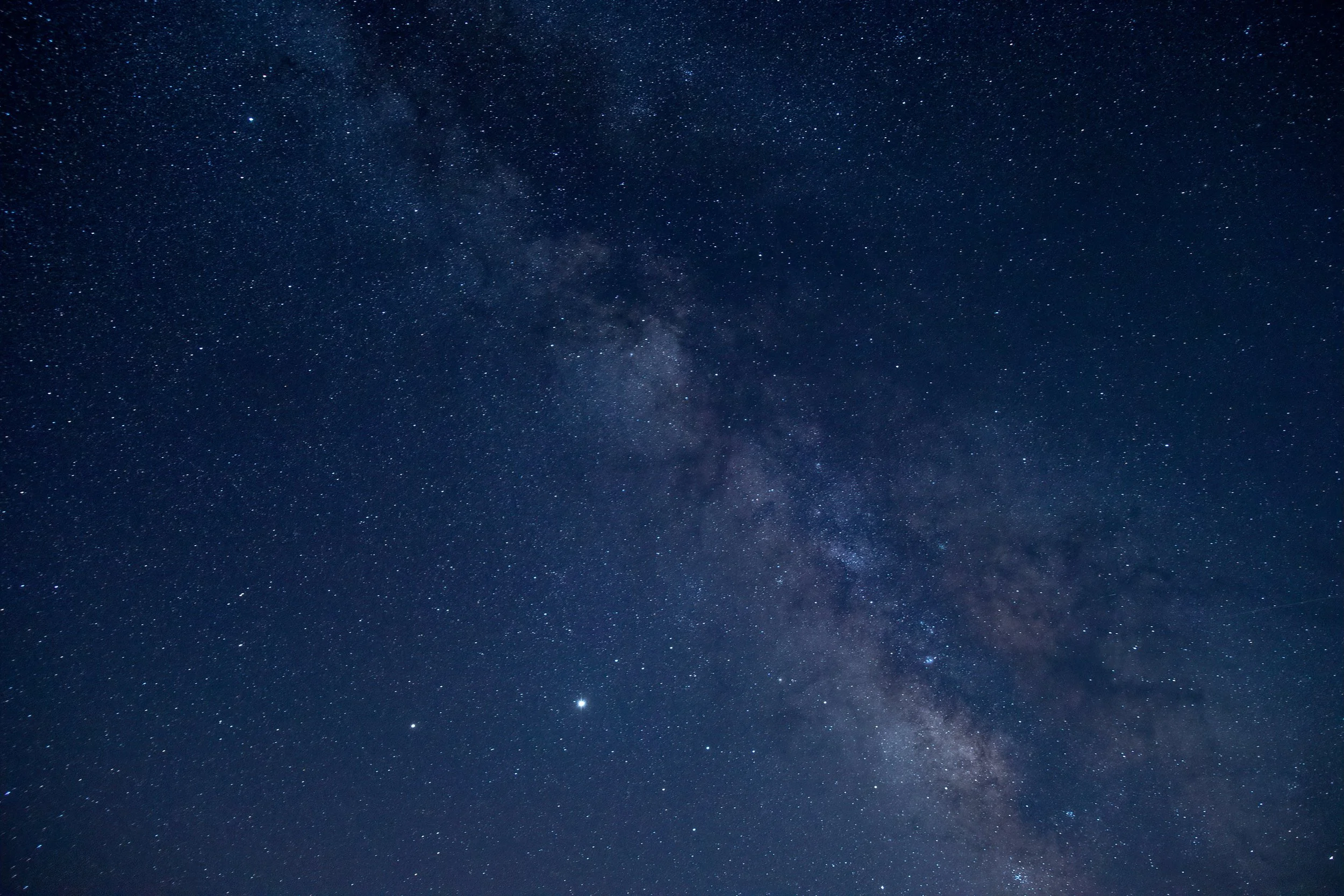
Milky Way by Heather Russell
Life has relied on Earth’s rhythm of day and night for billions of years. Dark skies are vital for wildlife. Light pollution, or artificial light at night, is caused by any type of outdoor lighting which includes streetlights, lights on porches and houses, landscape lighting, and homes and office buildings that leave indoor lights on during the night without using blinds or closing other window coverings. Artificial light at night disrupts breeding, hunting, and migration patterns, leading to population declines in mammals, birds, sea turtles, and insects. Darkness provides essential cover from predators and enables natural, energy-efficient movement for species that have evolved over millions of years
Key Reasons Dark Skies Matter for Wildlife:
Migration Disorientation: Migrating birds use stars to navigate, and artificial lights from cities can confuse them, causing collisions with buildings or exhausting, fatal detours.
Sea Turtle Survival: Sea turtle hatchlings rely on the brightness of the moon and stars reflecting on the ocean to find the water. Coastal lights attract them inland, leading to death.
Nocturnal Predator-Prey Balance: Many predators use darkness to hunt, while prey uses it to hide. Light pollution disrupts this balance, often giving predators an unfair advantage and reducing feeding opportunities for others.
Reproductive Cycles: Artificial lighting can interrupt the breeding rituals such as nighttime croaking of amphibians, like frogs and toads, by mimicking daylight, reducing their reproductive success. It also disrupts the mating and foraging behaviors of fireflies and moths. Light pollution disrupts firefly communication, mating, and their survival. Lightning bugs, or fireflies, rely on bioluminescent flashes to find mates. Without seeing each other flash their lights, male and female fireflies will not be able to find each other. If they can’t see each other, they can’t reproduce and fewer fireflies will be born in subsequent years.
Ecological Health: Many nocturnal organisms, including insects that serve as pollinators, are attracted to artificial light a phenomenon known as “flight to light”. This leads to them flying towards and circling the light source and causing them to die from exhaustion or collisions/contact with hot surfaces. The light also makes them more visible to predators such as bats and birds. Studies have shown that artificial light at night (ALAN) reduces nocturnal pollinator visits by over 60% decreasing fruit production and harming biodiversity.
Productivity: Nocturnal plants may not bloom reducing food that is available to nighttime pollinators.
Steps you can take at home to mitigate light pollution:
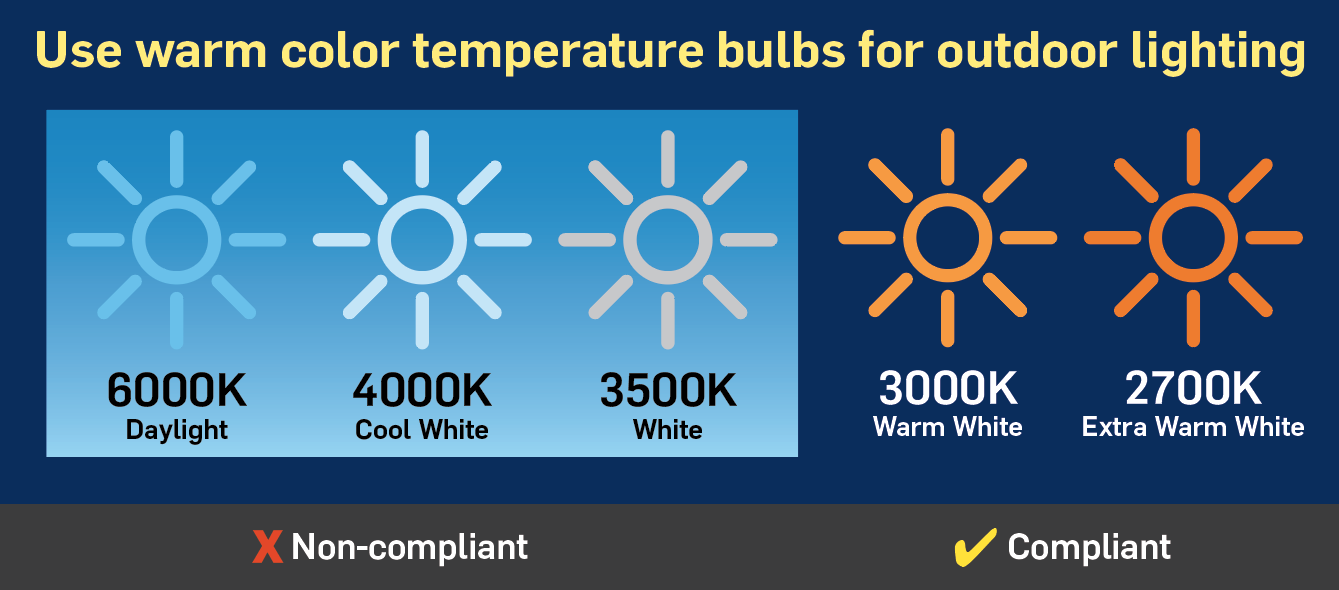
Color matters: Reduce the use of blue-violet light. Use warmer colored lightbulbs, bulbs with a temperature of no more than 3000 Kelvin, to help minimize the disruption to insects. Look for “warm light” or “soft light” bulbs.
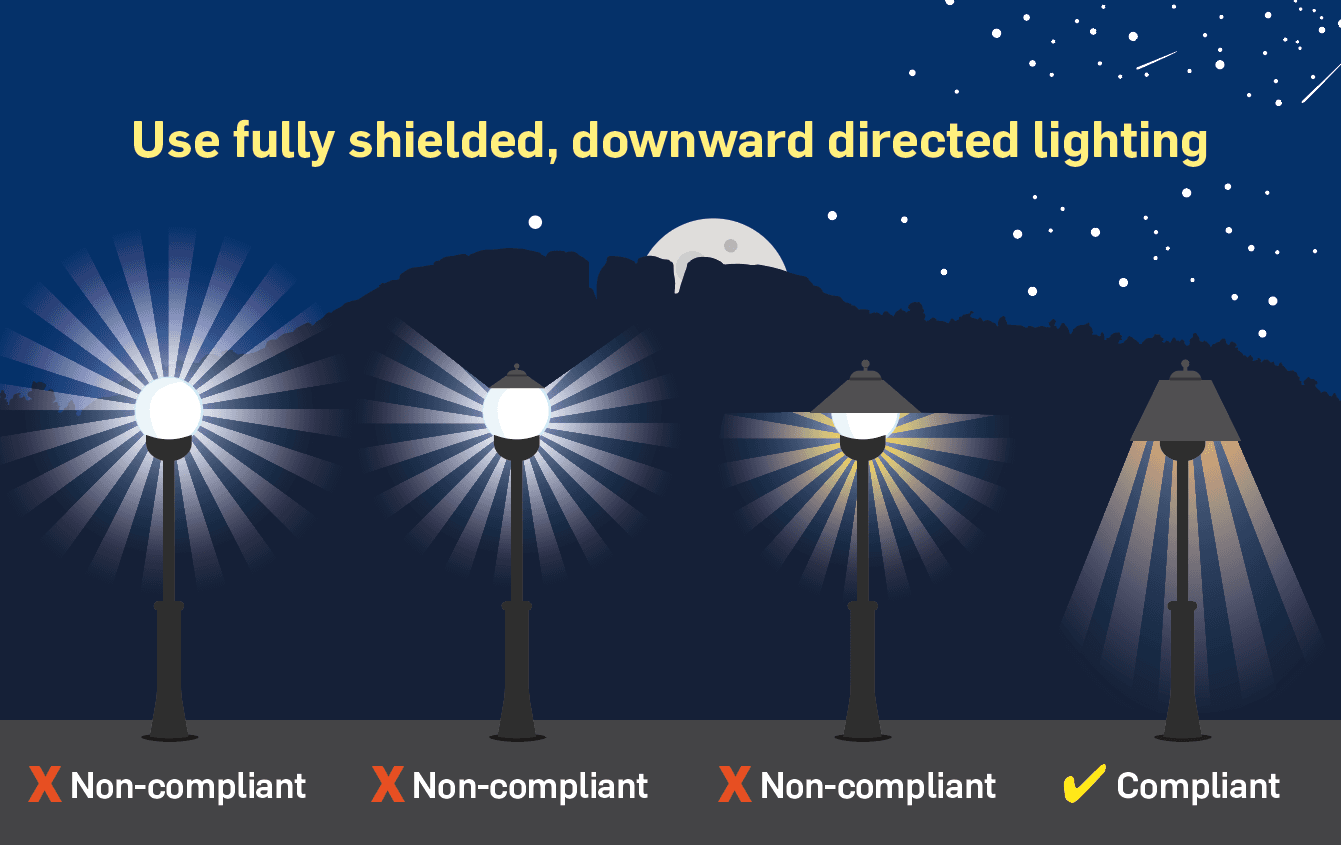
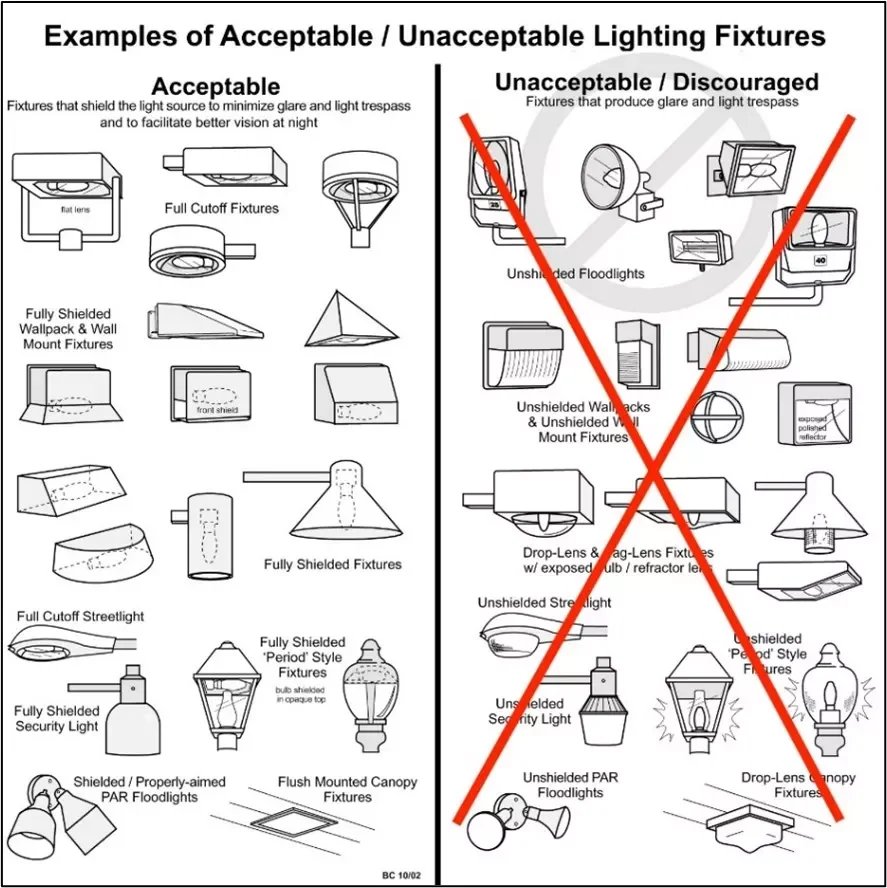
Shield outdoor fixtures: Shield your outdoor fixtures to aim light downward rather than light that drifts up into the sky.
Automate: use motion sensors to make sure lights are off when not needed.
Keep light indoors: Close your blinds or curtains at night to keep the light inside.
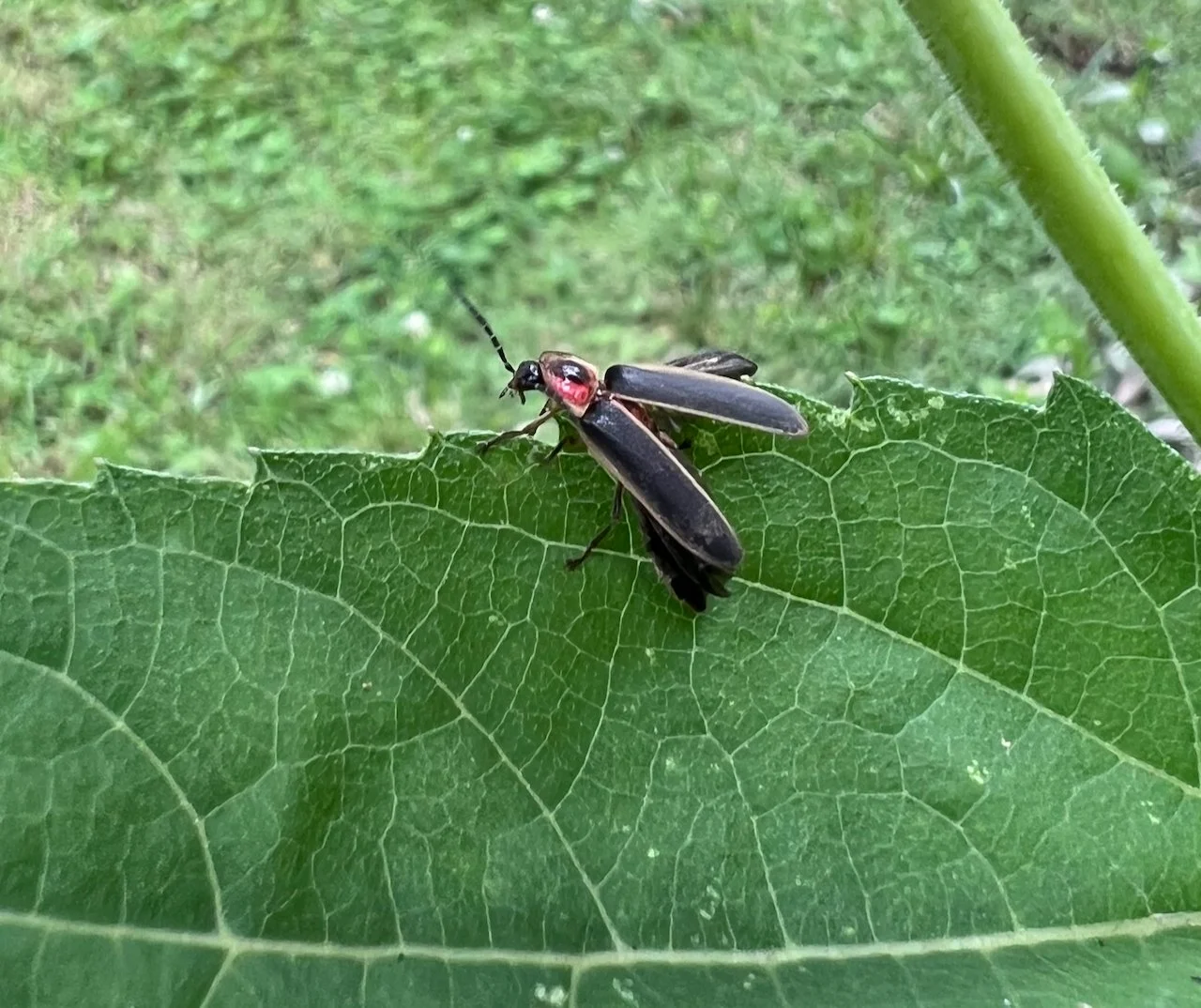
Common Eastern Firefly by Heather Russell